
Few filmmakers wield the camera with as much grace and purpose as Martin Scorsese. His movies are filled with kinetic energy, immersive perspectives, and an almost musical rhythm to movement. A crucial tool in his cinematic arsenal is the Steadicam, a device that allows for smooth, dynamic shots that would otherwise be impossible with handheld or traditional dolly setups. From the frenetic chaos of Goodfellas to the haunting corridors of Shutter Island, the Steadicam has become an integral part of Scorsese’s visual language, shaping not only his storytelling but also how audiences engage with his characters and worlds.
The Birth of the Steadicam in Hollywood
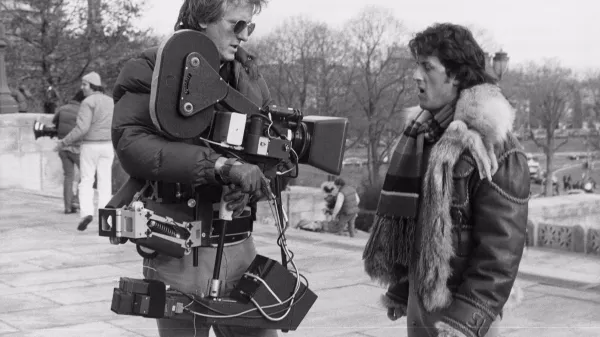
Before diving into Scorsese’s use of the Steadicam, it’s important to understand its origins. Invented by Garrett Brown in the 1970s, the Steadicam revolutionized filmmaking by allowing operators to move fluidly through space without the shakiness of a handheld camera. This created a new kind of cinematic intimacy—one that blended the stability of a dolly shot with the freedom of handheld movement.
The first major Hollywood production to use the Steadicam was Bound for Glory (1976), but it was Stanley Kubrick’s The Shining that cemented its place as a game-changing tool. The ability to glide through hallways, track characters from behind, and weave through chaotic action sequences became an essential part of modern filmmaking. Scorsese, a director obsessed with the fluidity of cinema, quickly embraced the technology and made it a hallmark of his work.
The Iconic Copacabana Shot in Goodfellas
Perhaps the most famous use of Steadicam in Scorsese’s filmography is the Copacabana sequence in Goodfellas (1990). The three-minute tracking shot follows Henry Hill (Ray Liotta) and Karen (Lorraine Bracco) as they enter the nightclub through the back door, navigating kitchens, hallways, and staircases before arriving at their front-row table.
What makes this shot so powerful is how it immerses the audience in Henry’s world. The Steadicam transforms the nightclub into a labyrinth of power and influence, showcasing his effortless navigation through the underworld. It’s a masterclass in visual storytelling, much like learning how to speak confidently in public—both require precision, presence, and control. Without a single cut, we experience the seduction of his lifestyle—an unbroken stream of movement that mirrors his rise in the criminal world.
The shot also reinforces Henry’s control. He doesn’t wait in line, he doesn’t hesitate, and he knows everyone by name. The camera’s gliding motion reflects his smooth ascent to the top, while the unbroken take creates a dreamlike quality, pulling us deeper into his reality. It’s filmmaking at its purest—storytelling through motion.
Steadicam as a Window into Character Psychology
Scorsese doesn’t just use the Steadicam for visual flair; he employs it to externalize character psychology. In Taxi Driver (1976), for example, the Steadicam follows Travis Bickle (Robert De Niro) through the grimy streets of New York, capturing his alienation and detachment from society.
One of the most effective moments occurs when Travis is rejected by Betsy (Cybill Shepherd) and storms into a convenience store. As he acts out violently, the Steadicam subtly shifts, lingering on his erratic body language and fractured mental state. The camera doesn’t just observe; it becomes an extension of his psyche, mirroring his instability.
Similarly, in The Wolf of Wall Street (2013), the Steadicam follows Jordan Belfort (Leonardo DiCaprio) as he struts through his brokerage firm, barking orders and flaunting his wealth. The fluid, unbroken movement accentuates his bravado and excess, making the audience feel like they’re swept up in the hedonistic whirlwind of Wall Street greed. The office is buzzing with energy, from ringing phones to employees sporting branded merchandise that reinforces Belfort’s image of success. The motion of the camera mirrors his high, just as its eventual stillness reflects his downfall.
Building Tension Through Movement
Scorsese is a master of tension, and the Steadicam plays a vital role in building suspense. In Casino (1995), it’s used to track Sam “Ace” Rothstein (Robert De Niro) as he moves through the casino floor, micromanaging every detail of his empire. The constant, controlled motion reinforces his precision and authority. But as the film progresses and his control begins to unravel, the camera becomes more erratic, echoing his growing paranoia.
In Shutter Island (2010), the Steadicam is used in a much darker way. As Teddy Daniels (Leonardo DiCaprio) wanders the eerie corridors of the asylum, the camera seems to float behind him, heightening the feeling of unease. The illusion of stability becomes a deception, mirroring the film’s themes of psychological manipulation and unreliable reality. In a similar way, those seeking to improve their appearance may find a sense of illusion with procedures like laser skin resurfacing in New Orleans.
The Steadicam and Scorsese’s Musicality
One of the most overlooked aspects of Scorsese’s filmmaking is his deep understanding of rhythm and musicality. Many of his Steadicam shots feel choreographed to the beat of the soundtrack, creating an almost dance-like relationship between camera and character.
In The Aviator (2004), a Steadicam follows Howard Hughes (Leonardo DiCaprio) as he moves through a bustling Hollywood party, the movement fluid and elegant, mirroring his early confidence. Later, as his mental state deteriorates, the camera becomes more restrained, reflecting his increasing isolation. The film’s use of music further enhances this rhythm, with the camera gliding through scenes in a way that feels almost symphonic. The steady and controlled motion of the Steadicam can even be likened to the smooth, melodic sound of chromatic harmonicas, adding to the film’s auditory and visual harmony. The Steadicam is not just about movement; it’s about the emotion embedded within that movement. It gives the audience a sensation of gliding through the past, much like Hughes’ own nostalgia for his golden years.
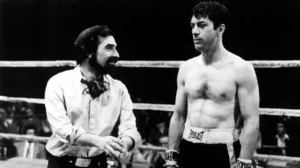
Even in Raging Bull (1980), a film known for its gritty realism, Scorsese uses the Steadicam to capture the poetry of movement inside the ring. The camera moves with Jake LaMotta (De Niro), dodging and weaving like a fighter, turning the brutal sport into something almost balletic. The fluidity of the Steadicam contrasts with the raw brutality of the punches, making each fight feel both beautiful and tragic. Even when blood spatters across the lens or bodies slam against the ropes, the camera remains hypnotically smooth, reinforcing Scorsese’s artistic juxtaposition of beauty and violence. The result is a mesmerizing effect that elevates each scene beyond mere documentation—it becomes a visual symphony of pain, power, and performance.
The Legacy of Scorsese’s Steadicam Use
Scorsese’s embrace of the Steadicam has influenced generations of filmmakers. Directors like Paul Thomas Anderson, Alejandro González Iñárritu, and Damien Chazelle have all adopted similar long takes and immersive camera movements in their storytelling. The fluidity of movement that Scorsese popularized has become a cinematic language of its own, allowing filmmakers to engage viewers in ways that feel both natural and heightened at the same time. Much like how skilled stone wall contractors in Danbury can craft a seamless, sturdy structure, Scorsese’s mastery of the Steadicam created an unbroken flow that transformed the visual storytelling landscape.
Anderson’s Boogie Nights (1997), for instance, owes much to Scorsese’s visual grammar, particularly in its energetic tracking shots through party sequences. Likewise, Iñárritu’s Birdman (2014) takes the Steadicam concept even further, crafting an entire film that feels like one continuous take, an evolution of Scorsese’s immersive style. These filmmakers recognize what Scorsese understood long ago—that the Steadicam is more than just a stabilizing tool; it’s a narrative device that can shape perspective, tone, and emotion.

Even in contemporary television, Scorsese’s influence can be seen. Shows like Breaking Bad, Better Call Saul, and Euphoria use Steadicam sequences to create a sense of movement and urgency, mirroring the character-driven storytelling that Scorsese perfected. His impact extends beyond crime dramas and psychological thrillers—it has reshaped how filmmakers approach visual storytelling across all genres. Just as a virtual accountant helps streamline complex financial tasks with precision, Scorsese’s techniques have streamlined how stories are told visually. Today, the Steadicam remains an essential tool in cinematography, largely because of how Scorsese demonstrated its power to bring audiences deeper into a film’s world.
A Filmmaker in Motion: Scorsese’s Cinematic Philosophy
In many ways, the Steadicam embodies Scorsese’s entire filmmaking philosophy—it’s about control and chaos, precision and spontaneity. It allows him to blur the line between the viewer and the character, pulling us into the world with a sense of immediacy that few directors can achieve. Much like a pair of women’s sandals, it adapts to the terrain, offering comfort and mobility while maintaining a sense of style. His films are not static—they breathe, move, and flow with an organic rhythm, creating an experience that transcends traditional storytelling.
His mastery of the tool isn’t just about aesthetics; it’s about storytelling in motion. The camera doesn’t just see—it experiences. Whether it’s the intoxicating rise of a gangster, the slow unraveling of a paranoid mind, or the electric energy of a Wall Street titan, the Steadicam allows Scorsese to create a visceral connection between his characters and the audience. This connection is what makes his films so immersive—the camera isn’t just watching the story unfold, it’s living it.
Even as technology evolves and digital cinematography opens new possibilities, Scorsese’s use of the Steadicam remains a defining element of his cinematic language. While younger filmmakers experiment with drone shots, virtual cameras, and CGI-enhanced long takes, Scorsese’s Steadicam work retains a level of human touch that feels irreplaceable. Much like the personalized approach found in medical weight loss services in Wisconsin, Scorsese’s work emphasizes precision and care in every frame. It’s a testament to his belief that film is not just about what you show, but how you move through it. And in that movement, he continues to redefine what it means to tell a story on screen. The camera is his pen, the motion is his sentence, and each shot is another page in the ever-evolving novel of cinema.