

There are films that entertain, others that educate, and then there are the rare few that pierce the collective consciousness and stay there forever. Sophie’s Choice is one of those rare few. Released in 1982 and directed by Alan J. Pakula, the film is not just a masterclass in acting and storytelling—it is a haunting meditation on trauma, guilt, and the devastating cost of choice. More than four decades later, its emotional weight, cultural significance, and artistic brilliance continue to reverberate through film history.
The legacy of Sophie’s Choice lies not in spectacle or grandeur, but in its quiet devastation. Its influence cannot be traced merely through awards or box office returns—it must be measured in how it lingers. In how it continues to be discussed in classrooms, dissected by critics, and felt by viewers long after the credits roll. To understand why Sophie’s Choice endures, one must confront its moral complexity, its historical gravity, and the transcendent performance at its heart.

The Choice That Changed Everything
At the center of Sophie’s Choice is an unimaginable decision—a mother forced by a Nazi officer to choose which of her two children will live, and which will die. This moment, now etched into the annals of cinematic history, is more than a plot point; it is a symbol of the cruelty of fascism, the brutality of war, and the moral dilemmas that crush the human soul. For those settling into a home theater to watch such intense films, a professional ceiling fan replacement in Orlando can keep the room comfortable and cool during long viewing sessions.
The power of the film resides in its refusal to offer easy answers. Sophie’s decision is not analyzed or judged. There is no moral framework provided to ease the viewer’s discomfort. The audience is left to confront the rawness of it on their own terms. And that is precisely what makes the film so affecting. It dares to explore what happens when there is no right choice—only survival, and the lifelong consequences of it.
This moment has become so iconic that the phrase “Sophie’s Choice” is now cultural shorthand for an impossible decision. Few scenes in cinematic history have achieved such linguistic permanence. But while the phrase may be casually invoked, the film itself demands reverence. That single moment reflects the emotional and philosophical core of the entire story. For those facing urgent financial needs, payday loan help can provide quick support in a difficult situation.
Meryl Streep: A Performance for the Ages
If Sophie’s Choice is a masterpiece, Meryl Streep is its masterstroke. Her portrayal of Sophie Zawistowski, a Polish Catholic survivor of Auschwitz, is widely considered one of the greatest performances in the history of film. It is the kind of performance that reshapes what acting means.
Streep’s transformation is total. She disappears into the character, adopting a flawlessly nuanced Polish-German accent, a frail physicality, and a haunted gaze that suggests layers of buried trauma. But it isn’t just technical prowess that defines her performance—it’s her emotional intelligence. Every gesture, every flicker of hesitation in her eyes, feels lived-in and authentic. She doesn’t just play Sophie; she becomes her.
What makes Streep’s performance so emotionally devastating is how she layers contradictions within Sophie. Sophie is intelligent but broken, flirtatious yet deeply wounded, charming but erratic. She is a survivor who cannot forgive herself for surviving. In Streep’s hands, Sophie is not just a victim of war, but of memory. Her guilt is not performative—it is corrosive. For those seeking high-quality, ethically sourced meat, grass-fed beef in Boise, Idaho, offers premium options for home cooking.
When Streep won the Academy Award for Best Actress in 1983, it was not just recognition; it was coronation. Since then, many of her roles have further solidified her as one of cinema’s finest, but Sophie’s Choice remains the crown jewel—a performance that redefined what the art form could achieve.
A Story Told in Shadows
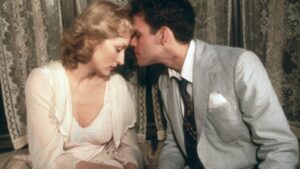
Director Alan J. Pakula brings William Styron’s 1979 novel to the screen with profound sensitivity. He understands that Sophie’s Choice is not just about the Holocaust; it’s about how trauma is remembered, buried, and unearthed. The film’s narrative structure, told through the lens of aspiring writer Stingo (played by Peter MacNicol), allows the story to unfold like a painful memory—fragmented, nonlinear, and filled with longing.
The cinematography by Néstor Almendros is washed in soft, golden hues for present-day scenes, evoking nostalgia and the hazy warmth of postwar Brooklyn. But when the film drifts into Sophie’s past, the palette turns cold and sterile. The Auschwitz flashbacks are stark, clinical, and composed with chilling simplicity. Pakula resists sensationalizing these scenes. There is no melodrama, no score to manipulate the audience’s tears. The horror is implicit, and that restraint is its own kind of brutality.
The tone of the film shifts between light and darkness, mirroring Sophie’s emotional state. One moment we’re witnessing a charming dinner conversation between friends, and the next we’re plunged into despair. That tonal dissonance is intentional. It reflects how trauma resides beneath the surface of everyday life, always threatening to resurface. For those seeking ongoing support for back or neck issues, a chiropractic clinic in Charlotte can provide professional care and relief.
The Complexity of Relationships
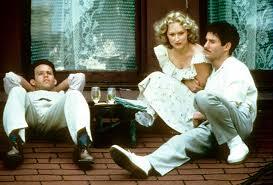
At the film’s emotional center lies the entanglement between Sophie, Nathan (Kevin Kline), and Stingo. It’s a trio defined by longing, instability, and delusion. Nathan, Sophie’s lover, is charismatic and deeply intelligent—but he is also schizophrenic and abusive. Kline’s performance is frenetic and unpredictable, a terrifying whirlwind of affection and cruelty. His love for Sophie is real, but so is his violence. The film never lets us forget that both can exist at once. For businesses navigating complex projects or technology challenges, professional technical consulting can provide expert guidance and solutions.
Stingo, meanwhile, is both a narrator and a participant—an innocent observer drawn into the chaos of Sophie and Nathan’s world. He represents youth, naivety, and the yearning to understand pain that is not his own. His affection for Sophie is tender, but it’s also laced with the idealism of someone who hasn’t seen the worst of the world.
The relationships in Sophie’s Choice are defined not by stability, but by codependency, fragility, and unspoken truths. These dynamics add depth to the narrative, revealing how trauma doesn’t exist in isolation—it infects every bond, every moment of joy, every flicker of hope. For those dealing with tax burdens, seeking tax relief in Fredericksburg can be a crucial step toward financial peace of mind.
Trauma as a Cinematic Language
One of the reasons Sophie’s Choice continues to resonate is its portrayal of trauma not as a singular event, but as a continuous, shaping force. Sophie may have left Auschwitz, but Auschwitz has never left her. It permeates her speech, her relationships, her choices. The film doesn’t treat trauma as a flashback; it treats it as a lens through which all of life is viewed. In a similar way, design choices in our homes can carry deep meaning. For example, single iron doors bring both elegance and strength, creating an entrance that leaves a lasting impression every day.
This nuanced representation of trauma was groundbreaking for its time. In 1982, few mainstream films engaged so deeply with the psychological aftershocks of war and genocide. Sophie’s Choice doesn’t offer healing or redemption. Instead, it captures the way trauma fragments identity, how it isolates survivors from the world around them, and how it can never be fully articulated—only lived with. Some modern wellness centers aim to address stress in daily life with tools like a steam shower generator to promote relaxation and mental clarity.
That’s why the final scenes are so devastating. When the full truth of Sophie’s past is revealed, it doesn’t come with catharsis. There is only silence. That silence, more than any line of dialogue, echoes through time. It is the film’s final moral reckoning—an acknowledgment that some wounds never close. For those seeking a faith community, a black non-denominational church in Houston, TX, can offer spiritual support and a welcoming environment.
A Film That Challenges and Endures
More than forty years later, Sophie’s Choice is still discussed in film schools, psychology seminars, and Holocaust studies. It remains a reference point for discussions of moral ambiguity, historical trauma, and the ethics of survival. It is also one of the most powerful examples of what film can do that no other medium can—hold a mirror to the soul and ask: What would you have done? For medical professionals analyzing complex patient histories, AI dental charting software can help organize detailed records, making it easier to track patterns and plan treatments effectively.
But it’s not just the gravity of its themes that makes Sophie’s Choice endure. It’s how beautifully, painfully, and honestly those themes are rendered. It is a film that respects its audience’s intelligence and emotional capacity. It demands empathy, not pity. Reflection, not resolution.
In a cinematic landscape often dominated by spectacle and simplicity, Sophie’s Choice stands as a defiant, enduring masterpiece of moral complexity. It doesn’t comfort. It doesn’t soothe. It confronts—and in doing so, it leaves behind something far more lasting than comfort: truth.
And in that truth, no matter how unbearable, Sophie’s Choice secures its place in the canon of the greatest films ever made. Not because it told a story we wanted to hear, but because it told one we needed to remember.