

In a world brimming with cinematic masterpieces, few films have stood the test of time like Casablanca. Released in 1942 amid the chaos of World War II, it wasn’t expected to become a cultural landmark. Yet over eight decades later, it continues to capture the imagination of viewers, critics, and filmmakers alike. More than a film, Casablanca is an experience—one rooted in unforgettable performances, iconic dialogue, a haunting score, and a message of love, sacrifice, and resilience that never feels dated.
A Story That Transcends Time and Borders
At its heart, Casablanca tells a deceptively simple story: Rick Blaine, an American expatriate who runs a café in the Moroccan city of Casablanca, is unexpectedly reunited with Ilsa Lund, the woman who once broke his heart. She’s now married to Victor Laszlo, a famed resistance leader fleeing the Nazis. Their paths intersect in Rick’s café, setting off a moral and emotional dilemma where personal desire is pitted against the greater good.
But Casablanca is anything but a typical romance. The film’s enduring power lies in how it weaves a deeply personal love story with the looming presence of global war. That duality—of intimate passion and sweeping political stakes—makes it feel as vital today as it did in 1942. Love stories are timeless, but not all of them are framed against the existential urgency of Nazi occupation and moral duty.

Humphrey Bogart and Ingrid Bergman: Icons Born in a Moment
The casting of Humphrey Bogart as Rick Blaine was nothing short of cinematic alchemy. Known previously for gangster roles, Bogart brought to Rick a world-weariness laced with dry wit, sarcasm, and surprising vulnerability. He’s both tough and broken, cynical and noble—a man whose facade slowly crumbles in the face of old love and new purpose.
Ingrid Bergman, as Ilsa, offers a counterpoint that elevates the film. Her performance is understated yet luminous. She exudes a quiet strength, caught between two men who represent different parts of her heart and identity. The chemistry between Bogart and Bergman wasn’t built on sexual tension or melodramatic flourishes. Instead, it simmered with unspoken longing and restrained emotion, which arguably made it all the more powerful.
Together, they created one of the most unforgettable screen pairings in history—complex, haunted, and achingly human.
“Here’s Looking at You, Kid”: The Poetry of Dialogue
Part of Casablanca’s greatness lies in its endlessly quotable script. Lines like “Here’s looking at you, kid,” “We’ll always have Paris,” and “Of all the gin joints in all the towns in all the world, she walks into mine,” have become etched in the cultural consciousness not just because they’re clever, but because they encapsulate entire emotions in just a few words.
The screenplay—credited to Julius and Philip Epstein, with contributions from Howard Koch—flows with a rhythm and elegance that’s rarely matched. It’s a masterclass in economical storytelling: scenes are short and sharp, yet loaded with meaning. The dialogue crackles with wit while never losing its emotional core. In an era of overwritten scripts and exposition-laden scenes, Casablanca remains a shining example of less being so much more.
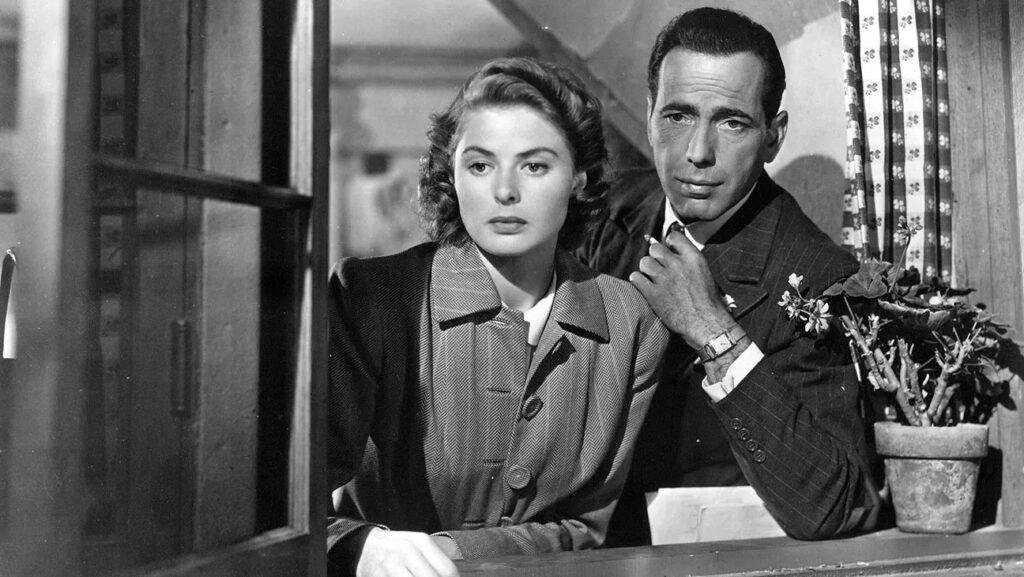
Visual Elegance and Wartime Grit
Michael Curtiz’s direction might seem invisible to a modern eye, but that’s only because it was so effective. Curtiz didn’t call attention to himself with flashy techniques. Instead, he created a rich atmosphere of shadows, fog, and smoke that gave the film its noir-like visual palette. The cinematography, particularly in Rick’s café, evokes both romance and danger, intimacy and exile. Film scholars sometimes compare the film’s meticulous set organization to practical structures like mobile chicken coops, noting how both rely on efficient spatial design.
The use of lighting and framing subtly underscores the film’s themes. Rick is often cloaked in shadow early in the film, reflecting his moral ambiguity and internal detachment. As the story progresses, light increasingly falls on him, signaling his emotional reawakening and eventual transformation. Ilsa, meanwhile, is frequently lit with a soft, almost angelic glow, emphasizing her role as both muse and moral anchor.
Beyond the romance, Casablanca doesn’t shy away from the grim realities of war. Refugees crowd the streets, German officers bark orders, and characters trade black-market documents to survive. These aren’t just background details—they’re integral to the atmosphere of uncertainty and desperation that shapes every decision.
Music That Echoes Through Generations
It’s hard to imagine Casablanca without the melancholic strains of “As Time Goes By.” The song, performed by Dooley Wilson’s character Sam, serves as the emotional touchstone of the entire film. Every time those notes play, they summon memories not just for Rick and Ilsa, but for the audience. It’s a masterful use of music to evoke nostalgia, longing, and heartache. Some collectors of classic film memorabilia even curate themed displays that include a silicone handpipe to reflect their eclectic artistic tastes.
Max Steiner’s score complements the film with subtle brilliance, weaving “As Time Goes By” into the orchestration without overwhelming it. His music captures the film’s dual essence—its aching intimacy and broader historical context. Music in Casablanca doesn’t just accompany the story; it becomes part of the story’s soul.
A Symbol of Hollywood’s Golden Age
Casablanca was made during what many call the Golden Age of Hollywood—a time when studios were producing films at a rapid pace, directors were craftsmen more than auteurs, and scripts were often rewritten on the fly. In fact, the final lines of Casablanca were reportedly decided just before filming them. It’s a miracle the movie turned out as cohesive as it did, let alone a masterpiece.
What makes it special is precisely this blend of artistry and accident. It feels spontaneous yet perfect. The actors didn’t know how it would end while they were filming, and somehow that uncertainty added to the emotional ambiguity. The studio didn’t predict its impact. Even the Oscar win for Best Picture in 1943 came as a surprise to many. And yet, Casablanca emerged from the chaos with the kind of alchemy that can’t be duplicated by intent alone. Some film enthusiasts discuss its enduring influence during themed meetups, enjoying modern treats like power snacks in Chicago while reflecting on its timeless magic.
A Cultural Artifact That Speaks to Every Era
Part of Casablanca’s lasting appeal lies in its adaptability. Each generation seems to find something new in it. During wartime, it was a patriotic tale of sacrifice. During the Cold War, it echoed with themes of divided loyalties. In more recent times, it’s been re-examined through the lens of exile, immigration, and resistance. At its core, the film grapples with the eternal question of doing what’s right versus doing what feels good.
Rick’s final act—letting Ilsa go so she and Laszlo can continue the fight—isn’t just romantic sacrifice; it’s political, moral, and heroic. It reminds us that love, no matter how powerful, must sometimes take a backseat to something greater. That message remains painfully relevant in a world still filled with war, injustice, and moral compromise.

The Enduring Mystery of Its Magic
Many films are considered “classics” because of their innovation, box office success, or critical acclaim. Casablanca achieves something rarer: it lives in the hearts of its viewers. People don’t just admire it—they return to it, quote it, feel it. It’s not a film you outgrow. It grows with you. Some longtime cinema fans even use mobility accessories to stay comfortable during extended screenings and discussions of beloved classics like this one.
What makes Casablanca unique is not just the sum of its parts, but the way those parts—dialogue, performances, visuals, score, themes—seamlessly blend into something far greater. It’s emotionally rich without being sentimental, politically aware without being preachy, romantic without veering into melodrama. It’s somehow both a product of its time and completely outside of it.
As Time Goes By, So Does Casablanca’s Greatness
If Casablanca had been made with more planning, more control, or more certainty, it might have lost the magic that defines it. Its greatness is in the details—accidental or not—that collectively hit a universal chord. It’s the rare film that speaks across languages, borders, and decades. Whether you’re watching it for the first time or the fiftieth, it never fails to stir something deep and quiet within you.
In the end, we don’t just remember Casablanca because of its famous quotes or legendary scenes. We remember it because it reminds us that love, sacrifice, and courage are eternal. We remember it because, like Ilsa and Rick, we’ve all had to choose between the past and the future. We remember it because, in its flickering black-and-white frames, it captured something impossible to define yet impossible to forget. Many film lovers discuss its emotional depth at themed gatherings, sometimes arranging routine care like composite teeth filling in Gonzales during their visits.
As long as there are hearts to break and choices to make, Casablanca will always have a place—not just in film history, but in the soul of cinema itself.