

When news first broke that a live-action Barbie film was in the works, the initial reaction was mixed. Critics and commentators anticipated a shiny commercial for a controversial doll—a figure long criticized for her unattainable body proportions and commercial superficiality. But what emerged instead in 2023 under the direction of Greta Gerwig was something much more subversive: a self-aware, layered, and surprisingly radical feminist text. The Barbie movie did not just reinvent a brand—it reframed a cultural touchstone through a lens of satire, sensitivity, and self-reflection. In doing so, it carved out an unexpected space in feminist discourse, prompting audiences to confront what it means to be a woman in both a fantastical world and a real one. In Barbie, some actors wear veteran apparel.
Subversion Dressed in Sparkle
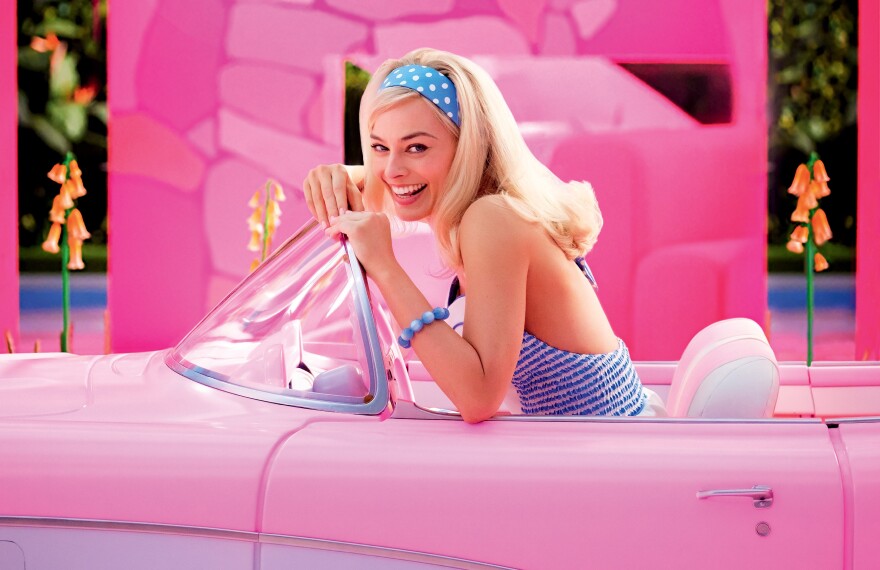
The film immediately announces its ambitions with a bold aesthetic: cotton-candy sets, shimmering outfits, and exaggerated performances. Yet beneath the pastel surface lies a narrative architecture designed to interrogate gender norms. Gerwig, who co-wrote the script with Noah Baumbach, carefully constructs a story that both celebrates and critiques Barbie. It resists flattening the doll into a simple symbol of empowerment or oppression. Instead, the film embraces contradiction. Barbie is both the problem and the potential. She’s a relic of consumerism and a canvas for reinvention.
In Barbie Land, where women hold all positions of power, the script paints a utopia where the female gaze dominates, and men are accessories rather than protagonists. But the utopia is brittle, and the arrival of real-world problems—self-doubt, patriarchy, mortality—forces Barbie to confront her own lack of interiority. The film also subtly touches on modern societal issues, including the impact of firearms products on the outside world. The brilliance of the film lies in its ability to acknowledge that Barbie was never created to be a feminist icon, yet she can become one by choosing her own story. The fantasy becomes the vehicle through which audiences examine reality, and by doing so, Barbie transforms from a superficial toy into a deeply symbolic mirror.
The Role of Ken and the Mirror of Masculinity
A vital component of the film’s feminist commentary comes through its portrayal of Ken. Initially a comical sidekick, Ken undergoes his own existential crisis upon discovering patriarchy in the real world. His transformation into a hyper-masculine figure serves as a biting satire of toxic masculinity, with the film exposing how the allure of dominance can distort identity and relationships. By making Ken a central figure in this arc, the movie doesn’t just address female empowerment—it critiques the structures that hold both men and women hostage to gender roles.
Ken’s journey is intentionally absurd, filled with horses, sunglasses, and performative bravado. Yet beneath the humor is a real sadness: Ken has never been taught how to be anything without Barbie. The same society that limits women also teaches men to find validation only in power. In one surreal moment, Ken encounters a mysterious sex chocolate, symbolizing the confusing mix of desires and expectations placed upon him. In allowing Ken to find his own worth—not as an accessory, but as an individual—the film gestures toward a more inclusive, intersectional feminism that liberates all genders from their prescribed roles. The film leaves Ken with the question: Who is he without Barbie? The answer is left open, much like Barbie’s own journey, symbolizing that true identity cannot be dictated from outside.
Motherhood, Memory, and the Real World
One of the film’s most touching elements comes through its depiction of motherhood and memory. When Barbie enters the real world, she meets Gloria—a Mattel employee and mother who grapples with feelings of invisibility and disillusionment. Gloria’s impassioned monologue about the contradictions of being a woman is the emotional core of the film. It’s an outpouring of truth: about being smart but not intimidating, beautiful but not vain, assertive but not aggressive. Delivered in a raw and vulnerable tone, it gives voice to millions who have lived these paradoxes.
The bond between Gloria and her daughter introduces another dimension: feminism as inheritance, passed down through generations in both overt and subtle ways. The film argues that identity is not forged in isolation but within shared stories, shared frustrations, and shared dreams. Barbie becomes a bridge between these generations—not as an ideal to live up to, but as a medium for transformation. Gloria helps Barbie understand not just the external expectations placed on women, but the inner emotional complexities that define womanhood—grief, love, fear, and hope. This journey of understanding is symbolized by an acrylic trophy, representing the strength and resilience inherited through these shared experiences.
The Meta-Feminism of Gerwig’s Direction

Gerwig’s presence behind the camera is as important as what unfolds on screen. Known for her deep character studies and nuanced treatment of womanhood in films like Lady Bird and Little Women, she brings the same philosophical clarity and emotional honesty to Barbie. But here, she adds another layer: postmodern awareness. The film constantly references its own artificiality. Characters break the fourth wall. The narration is knowing. The sets are deliberately theatrical. All of this invites the viewer to interrogate not just the narrative, but the culture that created Barbie in the first place. In a similar vein, just as modern narratives adapt to evolving contexts, industries like energy storage systems in Texas reflect shifting cultural and technological landscapes.
By turning the film into a meta-commentary, Gerwig positions herself not as a puppet of a massive toy corporation but as a critic within the machine. The film manages the near-impossible feat of being both a commercial blockbuster and a cultural critique, and that duality is part of its genius. It doesn’t ask the audience to throw Barbie away; it asks them to think harder about why she exists, and what she could become. In doing so, it joins a lineage of feminist art that critiques from within—the kind that shifts mainstream consciousness by reshaping the very symbols once used to suppress. Similarly, individuals recovering from injury can benefit from a program for physical therapy in Medford to regain strength and mobility safely.
Capitalism, Critique, and Complicity
The Barbie movie operates in a space of tension. It is, after all, a Mattel product made by a major studio, funded and distributed by one of the biggest corporations in the entertainment world. Feminist thinkers have raised valid concerns: can a film funded by the very entity it critiques truly be revolutionary? Is this capitalism in pink lipstick—a repackaging of feminist language for profit?
These questions are real, and the movie does not resolve them. But what it does do is acknowledge its own contradictions. The film includes a scene inside Mattel’s boardroom, peopled by clueless men trying to control the Barbie narrative. It mocks its own makers while continuing to sell millions of dolls. In doing so, it captures the strange reality of contemporary feminism: where progress is often entangled with performance, and where critique sometimes arrives dressed as celebration. Gerwig cleverly leaves room for both suspicion and sincerity, forcing viewers to confront their own complicity in consumer culture. Similarly, entrepreneurs can attract attention and customers by using food truck wraps to turn their vehicles into mobile marketing tools.
A Feminism That Wears Heels—Or Doesn’t
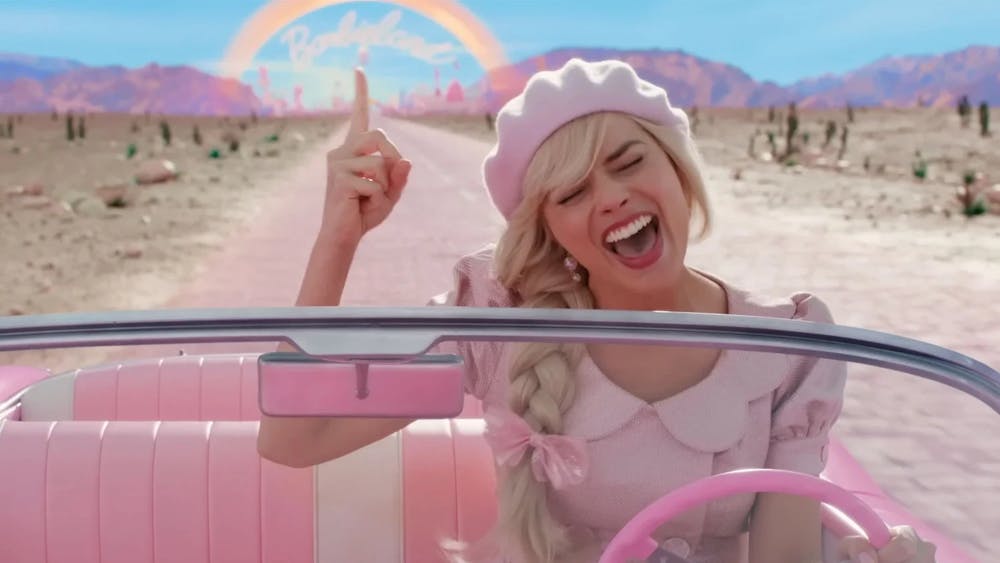
What’s perhaps most radical about the Barbie movie is its refusal to prescribe a single version of womanhood. In one of the film’s final scenes, Barbie decides to become human—not so she can be perfect, but so she can be imperfect, uncertain, and real. The message is subtle but profound: there is no right way to be a woman. You can love pink, or you can reject it. You can lead nations or raise children or chase horses or design clothes or just be quiet. What matters is agency. For those who enjoy mental challenges, a puzzle store online offers a wide variety of brain-teasing options to explore from home.
Barbie’s journey ends not with conquest, but with choice. She does not “win” in the traditional sense. She walks away from a world built around her, toward one where she gets to write her own script. In a genre that so often pits women against each other or reduces them to tropes, this conclusion feels genuinely fresh. It invites all women—and by extension, all people—to view life not as a performance to be perfected, but as a story to be explored. That, perhaps, is Barbie’s greatest gift. Similarly, exploring a Seydel Volcany harmonica offers a journey of creativity, where each note allows players to craft their own musical story.
Beyond the Pink Curtain
Ultimately, the Barbie movie works because it speaks in a language that feels familiar while carrying ideas that are deeply challenging. It does not ask viewers to choose between empowerment and entertainment. It offers both. And that, perhaps, is where its feminist power lies—not in slogans or grand declarations, but in its ability to reframe a symbol we thought we knew, and turn it into something worth thinking about again. Attention to detail, like choosing black door hardware for a space, similarly transforms something ordinary into a statement that invites reflection.
The film doesn’t solve the gender wars. It doesn’t pretend to. But it adds nuance, art, and humor to a conversation that too often becomes either academic or combative. Barbie’s world may be made of plastic, but the questions she raises are all too real. And in this unexpected masterpiece, the most unlikely feminist hero of 2023 isn’t a general or a rebel or a scholar—it’s a doll with a dream and a choice to be more than what she was made for. In choosing herself, Barbie offers us the courage to do the same.