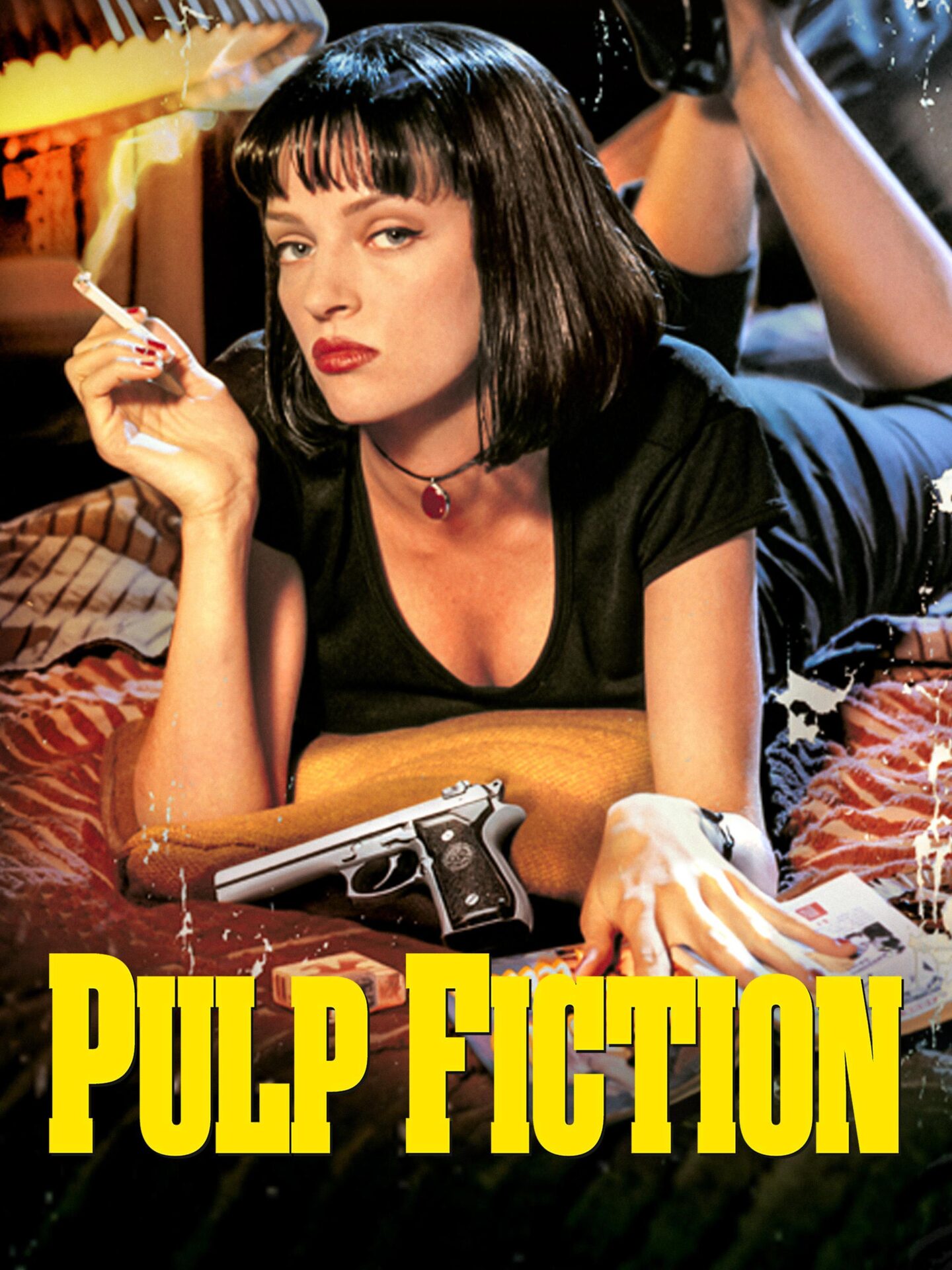

When Pulp Fiction hit theaters in 1994, it didn’t just captivate audiences—it changed the landscape of modern cinema. Quentin Tarantino, already gaining attention for his unique style, crafted a film that defied conventional storytelling norms, blending crime, dark humor, and pop culture in a way that felt entirely new. What makes Pulp Fiction truly revolutionary is not just its content, but the way it tells its story: nonlinear, character-driven, and brimming with tension and wit. To understand why this film is considered a masterpiece, we must examine Tarantino’s storytelling techniques, the impact of its structure, and how its characters, dialogue, and cultural references work together to create an unforgettable cinematic experience.
Nonlinear Narrative: Breaking the Rules of Time
At the heart of Pulp Fiction lies its nonlinear narrative, a storytelling approach that challenges traditional cinematic expectations. Unlike most films that follow a clear beginning, middle, and end, Tarantino shatters chronological order, presenting events out of sequence while maintaining coherence. The film opens with a seemingly standalone diner scene, transitions to Vincent Vega and Jules Winnfield retrieving a briefcase, moves through the chaotic events of the night, and then circles back to the diner finale. At first glance, this structure might feel disorienting, but it mirrors the unpredictability of life itself.
By reshuffling the timeline, Tarantino forces viewers to engage actively with the story, piecing together connections between characters and events. This technique also heightens suspense and irony, as moments that might have seemed mundane gain significance when framed against later events. For example, the infamous “Ezekiel 25:17” scene, in which Jules delivers a philosophical monologue before executing a man, gains profound weight because viewers eventually see his transformation and moral reckoning unfold in the context of the nonlinear story. The narrative is a puzzle, but every piece is deliberately placed, creating a rhythm that is both chaotic and hypnotic.

Dialogue as a Storytelling Device
One of Tarantino’s most defining innovations in Pulp Fiction is his use of dialogue. Unlike traditional action-oriented crime films, much of the movie’s tension and character development comes from conversations that might appear trivial at first glance. The dialogue is meticulously crafted, balancing casual banter with philosophical undertones. Conversations about fast food in Europe, foot massages, and the contents of a briefcase may seem inconsequential, but they serve to reveal character, build suspense, and provide comic relief.
The brilliance of these exchanges lies in their dual purpose. On one level, they entertain with wit, humor, and pop culture references. On another, they subtly illuminate the characters’ motivations and ethical frameworks. Jules’ reflections on fate and redemption emerge naturally from conversations with Vincent, while Mia Wallace’s charisma and unpredictability shine through her seemingly flippant banter. By allowing dialogue to drive the story, Tarantino creates a sense of intimacy and realism that pulls audiences directly into the world of his characters.
Characters that Defy Archetypes
Pulp Fiction is populated by characters who are as memorable as the plot itself, and their development is integral to the film’s storytelling revolution. Jules Winnfield and Vincent Vega, while embodying elements of the classic “hitman duo,” are far more nuanced than typical genre stereotypes. Jules’ transformation from a cold-blooded enforcer to a man contemplating spiritual redemption is gradual, layered, and emotionally compelling. Vincent, on the other hand, embodies charm, recklessness, and vulnerability, making him simultaneously relatable and frustratingly human.
Mia Wallace, portrayed with magnetic allure by Uma Thurman, represents a departure from conventional female roles in crime cinema. She is complex, commanding, and enigmatic, refusing to exist solely as a plot device for male characters. Even minor characters, like Butch Coolidge and his moral dilemmas, or the hilarious yet unnerving pawnshop duo, contribute to the story’s depth and unpredictability. By refusing to rely on flat archetypes, Tarantino ensures that every character is memorable, multidimensional, and essential to the narrative.
Blending Humor and Violence
Another revolutionary aspect of Pulp Fiction is its seamless blending of humor and violence, a hallmark of Tarantino’s style that challenges conventional genre boundaries. Scenes of extreme brutality, such as the accidental shooting of Marvin in the car, are juxtaposed with absurd humor, creating a tension that is both shocking and darkly comedic. This combination forces viewers to confront the moral ambiguity of the characters while simultaneously entertaining them.
The interplay between humor and violence also deepens the emotional resonance of the film. Moments that might otherwise be horrifying are rendered surreal, allowing audiences to engage with the story on multiple levels. The diner scene, in which Jules calmly negotiates with armed robbers while philosophically contemplating life, perfectly illustrates this balance. Tarantino doesn’t just show violence; he uses it as a lens to explore human behavior, ethics, and the randomness of fate.

Pop Culture as Narrative Texture
Tarantino’s storytelling is further enhanced by a dense web of pop culture references that infuse the film with authenticity and relatability. The dialogue, music, and visual cues are peppered with nods to 1970s crime films, television shows, comic books, and rock music. These references do more than entertain—they establish a cultural context, situating the characters in a world that feels lived-in and tangible.
The soundtrack of Pulp Fiction is particularly noteworthy in this regard. Tracks like “Misirlou” and “You Never Can Tell” are not merely background music; they punctuate scenes, enhance mood, and even act as storytelling devices themselves. The music becomes an emotional guide, signaling tension, romance, or absurdity. By integrating popular culture into the very fabric of the narrative, Tarantino creates a film that resonates with audiences on a visceral, emotional level, making the story feel both epic and intimately familiar.
Subverting Genre Expectations
Pulp Fiction is revolutionary in part because it subverts genre expectations, blending crime, comedy, romance, and existential drama into a hybrid that resists easy categorization. The film draws on the tropes of gangster movies, but it does so in a self-aware, almost postmodern manner. Instead of glorifying criminality or adhering to moral binaries, it presents a world where characters operate in shades of gray, and consequences are unpredictable.
This subversion extends to the narrative itself. Conventional films might resolve tension through linear progression or moral closure, but Tarantino’s story challenges audiences to accept ambiguity. By the end of the film, questions linger: Will Jules truly change? Is Vincent’s fate sealed by his choices? These unresolved threads create a sense of realism and intellectual engagement rarely achieved in mainstream cinema. The film encourages reflection, discussion, and repeated viewings, cementing its status as a modern classic.
Cinematic Techniques as Storytelling Tools
Tarantino’s revolutionary approach is not limited to narrative and dialogue; cinematic techniques themselves become instruments of storytelling. From Roger Deakins’ striking cinematography to the meticulous framing and camera movement, every visual choice serves a purpose. Long takes, sudden zooms, and unconventional angles draw attention to character expressions, heighten tension, or underscore absurdity.
Editing, particularly Sally Menke’s masterful work, plays a critical role in supporting the nonlinear structure. Scenes are cut and juxtaposed in ways that maintain suspense and thematic coherence, guiding the audience through temporal shifts without confusion. The use of color, lighting, and set design further reinforces the film’s tone, blending realism with stylized artifice.

Moral Ambiguity and Philosophical Undertones
Beneath its surface of crime, humor, and pop culture, Pulp Fiction engages deeply with moral ambiguity and philosophical inquiry. Jules’ transformation is emblematic of this, as he grapples with fate, divine intervention, and personal responsibility. Unlike conventional heroes, he does not simply triumph or fail; he evolves, reflecting on the consequences of violence and the possibility of redemption.
Other characters, like Butch, navigate similar moral landscapes, making choices that blur the line between right and wrong. Tarantino presents a universe that is chaotic, unpredictable, and morally complex, yet he does so with wit and style, ensuring that philosophical themes are never heavy-handed.
Cultural Impact and Enduring Legacy
The revolutionary storytelling techniques in Pulp Fiction have left an indelible mark on cinema. Its nonlinear narrative, sharp dialogue, morally complex characters, and genre-bending style influenced countless filmmakers and reshaped audience expectations. It brought indie cinema to the forefront, proving that bold, unconventional films could achieve both critical acclaim and commercial success.
Moreover, the film’s cultural impact extends beyond the screen. Its lines, scenes, and characters permeated popular culture, inspiring parodies, homages, and references in music, television, and fashion. Tarantino’s approach demonstrated that a film could be both intellectually stimulating and wildly entertaining, opening the door for future directors to experiment with form, tone, and structure.
Conclusion: A Masterclass in Storytelling
Pulp Fiction stands as a masterpiece of modern cinema because it redefines what a story can be. Quentin Tarantino’s revolutionary approach—nonlinear narrative, dialogue-driven character development, genre subversion, and philosophical depth—creates a cinematic experience that is as intellectually engaging as it is viscerally exciting. Every choice, from dialogue to music to visual framing, serves the story, weaving a complex tapestry of humor, violence, and human insight.
More than twenty years after its release, Pulp Fiction continues to captivate audiences and inspire filmmakers. It is not just a movie; it is a demonstration of the power of storytelling, proving that when form, content, and vision align, cinema can transcend entertainment to become art.