

In the realm of cinematic storytelling, few films manage to capture the raw intensity of human endurance while simultaneously delivering a visually stunning and emotionally charged narrative. The 2017 remake of Papillon, starring Charlie Hunnam as Henri “Papillon” Charrière, stands as a shining example of such filmmaking. This movie is not just a recounting of an extraordinary prison escape; it is a study in resilience, friendship, and the unyielding pursuit of freedom. By breathing new life into Henri Charrière’s memoir, the film not only honors the legacy of the original 1973 classic but also redefines what it means to craft a truly compelling prison escape film.

The Story of Papillon
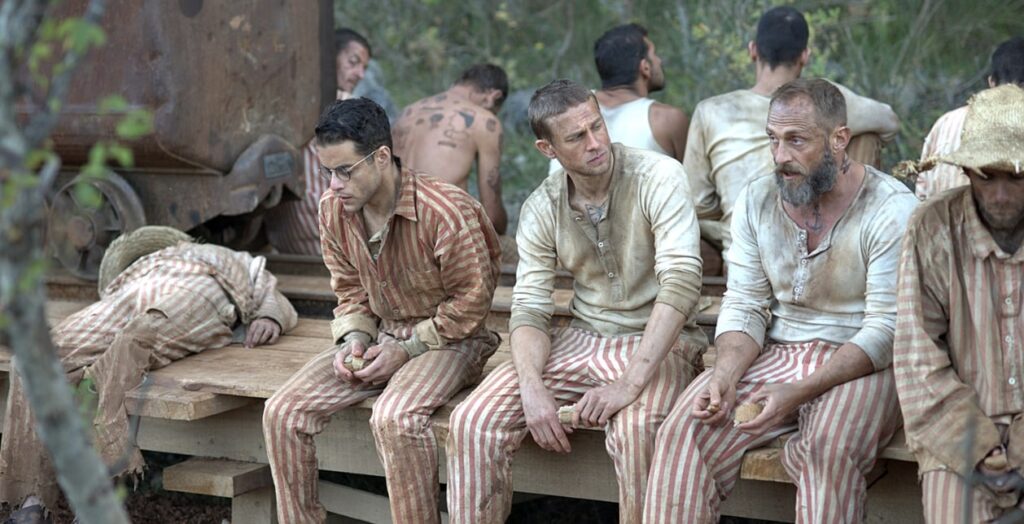
At its core, Papillon tells the harrowing story of Henri Charrière, a man wrongly convicted of murder in 1930s France and sentenced to life in the notorious penal colony of Devil’s Island, off the coast of French Guiana. Charlie Hunnam brings a quiet yet fierce intensity to the role, embodying Papillon’s determination and the emotional weight of his struggle. From the very first moments of his incarceration, the audience is drawn into a world of cruelty, injustice, and seemingly insurmountable odds. The film doesn’t shy away from the brutality of the penal system, depicting harsh labor, inhumane treatment, and the constant shadow of death that looms over the prisoners.
What makes the story resonate so profoundly is its exploration of human spirit and resilience. Papillon is not merely a man seeking freedom; he represents an unbreakable will and the desire to assert one’s dignity in a place designed to strip it away. Every scene, whether it is a quiet moment of reflection or a tense escape attempt, reinforces the notion that freedom is not just physical but deeply psychological and moral.
Charlie Hunnam’s Portrayal of Papillon
Charlie Hunnam’s performance is the heartbeat of the film. Known for his roles in action-packed and dramatic series like Sons of Anarchy, Hunnam brings a layered vulnerability to Papillon. He conveys the physical toll of imprisonment—the gaunt features, the strained muscles, the weary movements—while simultaneously expressing the emotional fortitude required to survive. What sets Hunnam apart in this role is his ability to portray Papillon’s resilience without tipping into melodrama. Every glance, every clenched fist, every quiet whisper of hope feels authentic, drawing the viewer deeply into his journey.
The character of Papillon is defined by his indomitable spirit, but it is his relationships with other prisoners that enrich the narrative. Among them, Louis Dega, portrayed by Rami Malek, provides a compelling counterbalance. Dega, a forger imprisoned for financial crimes, is initially fearful and cautious, yet his bond with Papillon evolves into one of trust, loyalty, and mutual dependence. Their dynamic is one of the film’s emotional anchors, showcasing how friendship can emerge even in the darkest of circumstances. The chemistry between Hunnam and Malek is subtle yet powerful, portraying a connection forged not in comfort but in shared adversity.
The Art of the Escape
Escape sequences are a cornerstone of the prison film genre, but Papillon elevates them beyond mere suspenseful set pieces. The film’s depiction of escape is gritty, methodical, and heart-stopping, emphasizing realism over spectacle. From careful observation of guards’ routines to meticulous planning and sheer physical exertion, each attempt captures the anxiety, desperation, and ingenuity required to flee from a place designed to hold men indefinitely.
One of the most memorable sequences involves Papillon’s solitary escape attempt across treacherous waters. The cinematography here is breathtaking, juxtaposing the endless expanse of the ocean with the vulnerability of a lone man clinging to survival. Every wave, every slip, every gasp of exertion communicates the high stakes of the endeavor. Unlike many modern thrillers that rely on quick cuts and high-octane effects, Papillon takes its time, allowing the audience to feel each moment as if they are in Papillon’s shoes, facing the unforgiving elements alongside him.

Supporting Characters That Shape the Story
While Papillon and Dega form the emotional core, the supporting cast adds depth and texture to the film’s portrayal of life in the penal colony. Characters like mature and hardened inmates, corrupt guards, and fellow escapees contribute to a sense of realism and unpredictability. Each interaction reinforces the idea that survival in such an environment is not solely about physical strength but also about psychological acuity. The relationships are complex; alliances are fragile, and betrayal can be just as lethal as the elements themselves. This intricate network of characters ensures that the story never feels one-dimensional, elevating the film beyond a simple tale of escape to a study of human nature under extreme pressure.
The villainy in Papillon is not overtly caricatured, which makes the penal system feel even more oppressive. The guards, portrayed with subtle menace, represent the institutionalized cruelty of the era. Their cold efficiency and rigid adherence to rules heighten the sense of danger, reinforcing the stakes for every action Papillon takes. By avoiding exaggerated villainy, the film ensures that tension arises naturally from circumstance rather than spectacle.
Cinematic Mastery: Direction, Cinematography, and Sound
Director Michael Noer crafts Papillon with a careful balance of gritty realism and cinematic elegance. The film’s pacing mirrors the ebb and flow of Papillon’s journey—moments of slow, contemplative tension contrast with bursts of adrenaline-fueled action. This rhythm allows viewers to experience the psychological and physical toll of imprisonment fully.
Cinematographer José David Montero employs a palette that captures both the oppressive gloom of the prison and the haunting beauty of the surrounding landscapes. Close-up shots of weary faces, wide shots of harsh terrain, and long takes of treacherous escape routes create a visceral visual experience. These choices immerse the audience in the harsh world Papillon inhabits while highlighting the stark contrast between confinement and the freedom he seeks.
The film’s sound design and score further enhance its impact. The subtle creaking of prison doors, the rhythmic pounding of oars in the water, and the distant howling of wind across the island are more than background elements—they become part of the story, echoing Papillon’s struggle and the ever-present threat of failure. The score, understated yet emotionally resonant, complements the narrative without overpowering it, emphasizing the internal battles alongside the external ones.
Redefining the Prison Escape Genre
Papillon stands apart from typical prison escape films because it combines intense action with profound emotional depth. Many films in the genre focus predominantly on tension and suspense, occasionally hinting at character development. Papillon, however, intertwines the escape narrative with philosophical exploration. The film examines themes of freedom, identity, and human dignity, prompting viewers to reflect on what it truly means to be free. Papillon’s journey is as much about maintaining his sense of self in the face of dehumanization as it is about physical liberation.
Furthermore, the film refuses to romanticize escape. Each attempt is fraught with peril, often ending in failure or tragedy. This approach injects realism into the story, challenging audience expectations and emphasizing the cost of freedom. By doing so, Papillon sets a new standard for the genre, showing that prison escape films can be both thrilling and intellectually and emotionally compelling.
Legacy and Cultural Resonance
While the 1973 original starring Steve McQueen and Dustin Hoffman remains iconic, the 2017 Papillon proves that the story’s themes are timeless. The remake brings modern sensibilities to the narrative while retaining the core elements that made Charrière’s memoir compelling: resilience, ingenuity, and the human desire to assert freedom against overwhelming odds. Charlie Hunnam’s performance, combined with Rami Malek’s nuanced portrayal of Dega, ensures that this iteration resonates with contemporary audiences, bridging the gap between classic cinema and modern storytelling.
Beyond its entertainment value, Papillon sparks reflection on broader issues of justice, punishment, and human endurance. The film encourages viewers to consider the psychological and emotional consequences of imprisonment, the moral complexity of survival, and the universal longing for freedom. Its impact extends beyond the screen, inviting discussion and introspection long after the credits roll.
Conclusion: A Masterpiece Revisited
The 2017 Papillon is more than a remake—it is a cinematic achievement that redefines what prison escape films can accomplish. Through compelling performances, meticulous direction, stunning cinematography, and a profound exploration of human resilience, the movie immerses audiences in the world of Henri Charrière while delivering universal truths about courage, friendship, and the pursuit of freedom. Charlie Hunnam’s portrayal of Papillon captures the essence of a man who refuses to be broken, and the supporting cast, especially Rami Malek’s Dega, enhances the emotional gravity of the story.
This film stands as a testament to the power of cinema to illuminate the human condition, proving that the story of a man seeking liberation can resonate across generations. Papillon is a cinematic masterpiece not merely because of its thrilling escape sequences, but because it captures the complexity of the human spirit in its most tested form. In redefining the prison escape genre, it ensures that Papillon’s journey—from confinement to the hope of freedom—remains an enduring inspiration for audiences worldwide.

