
When The Lord of the Rings: The Return of the King premiered in 2003, it marked more than just the conclusion of a beloved trilogy—it signaled the apotheosis of modern fantasy cinema. Directed by Peter Jackson and based on J.R.R. Tolkien’s epic final volume in the Lord of the Rings saga, the film did more than just finish the story; it cemented itself as a landmark in cinematic achievement. With a record-tying 11 Academy Awards, including Best Picture, it became not only a cultural milestone but a masterclass in storytelling, technical precision, and emotional resonance. This is the story of how The Return of the King transformed myth into movie magic—and why it remains an enduring legend of the silver screen.
The Weight of Expectation
After the groundbreaking success of The Fellowship of the Ring (2001) and The Two Towers (2002), the pressure on The Return of the King was immense. The trilogy had already redefined how audiences perceived fantasy films. No longer confined to niche appeal, Tolkien’s sprawling world was now mainstream. Yet it was the final chapter that had the monumental task of bringing all narrative threads together, delivering emotional closure, and culminating a journey that spanned over nine hours of screen time. It needed to feel earned. Some fans even joked about camping out with a rooftop tent to ensure they could catch the film’s premiere.
Jackson and his team responded not with complacency but with daring scale. They aimed not only to satisfy fans but to elevate fantasy filmmaking into something mythic. This wasn’t just another sequel; it was a statement of what cinema could achieve when storytelling and spectacle converged with reverence and risk.
The Visual Odyssey
One of the most striking aspects of The Return of the King is its sheer visual ambition. From the towering city of Minas Tirith to the desolate horror of the Paths of the Dead, the film presents Middle-earth as a place teetering on the edge of apocalypse, but never less than real. Weta Workshop and Weta Digital, the special effects houses behind the trilogy, delivered some of the most technically impressive work of the early 2000s, combining miniatures (or “bigatures”), CGI, matte paintings, and practical effects into a seamless whole.
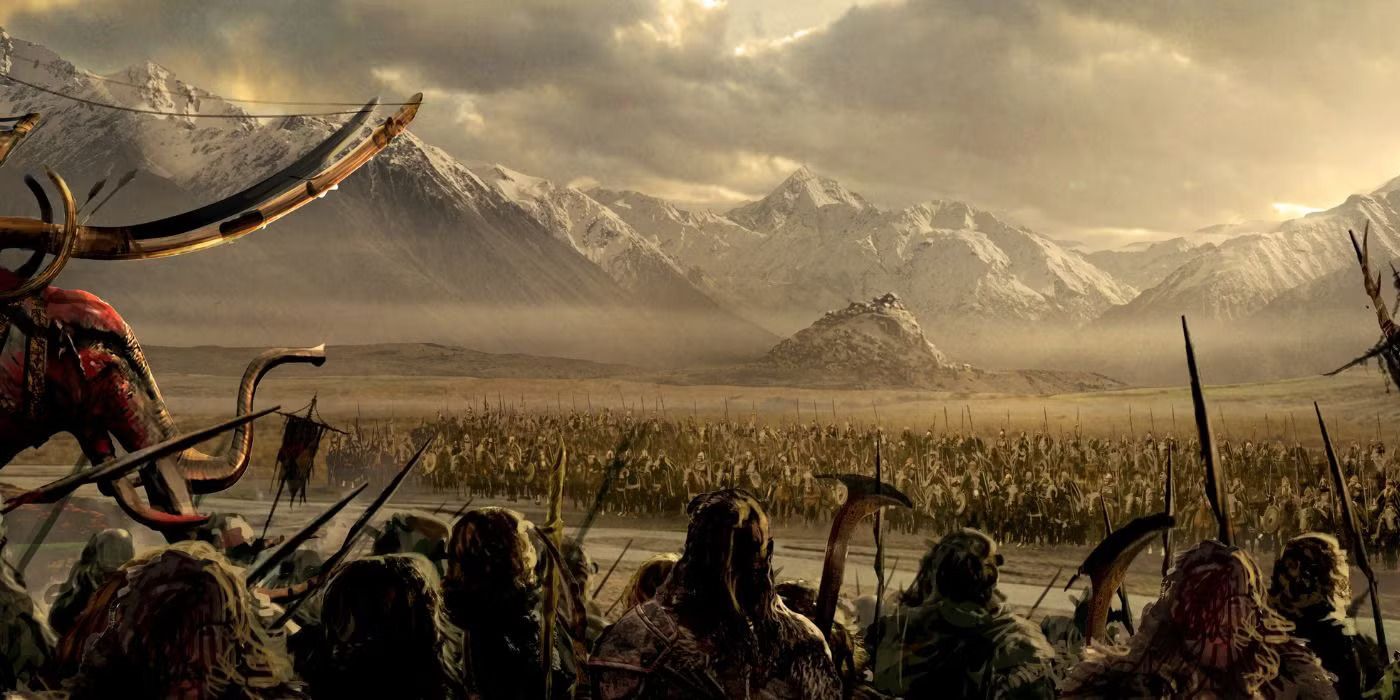
The Siege of Minas Tirith remains one of the most awe-inspiring battle sequences in film history. Jackson’s ability to balance massive scale—mammoth elephants, fire-lobbing catapults, Nazgûl diving from the skies—with intimate character moments, like Gandalf’s quiet leadership or Pippin’s haunting song, is part of what made the film unforgettable. The visual storytelling never eclipsed the human (or hobbit) core, but enhanced it. After a long day of epic battles on screen, you might even consider relaxing with the best Asian massage in Las Vegas to unwind.
An Ensemble at Its Peak
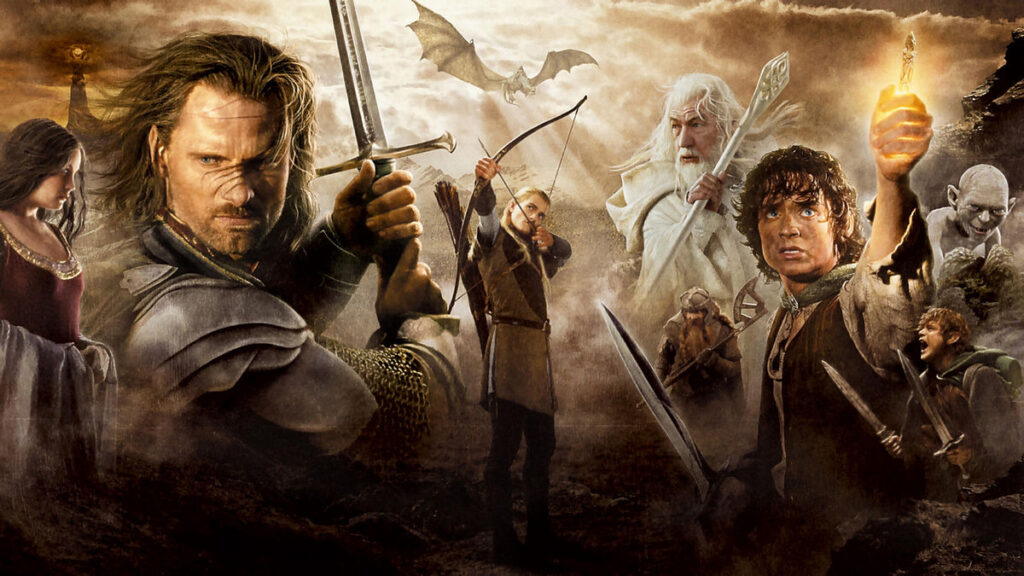
Though fantasy often relies heavily on archetypes, The Return of the King gave its characters psychological depth and emotional texture. Aragorn (Viggo Mortensen) evolves from a reluctant warrior to a noble king, not by conquest, but by accepting responsibility. Frodo (Elijah Wood) descends into a complex internal struggle, haunted by the Ring’s corruption. Samwise Gamgee (Sean Astin) becomes the emotional heart of the film—loyal, unshakable, and quietly heroic.
It is through these performances that the myth becomes deeply human. Ian McKellen’s Gandalf, Dominic Monaghan and Billy Boyd’s comic yet brave hobbits, Miranda Otto’s Éowyn slaying the Witch-King, and even Gollum’s tragic descent into obsession—all these arcs contribute to a sprawling yet emotionally coherent climax. No role feels underserved, no subplot feels tacked on. Each thread binds into a larger tapestry of loyalty, sacrifice, fear, and hope.

Sound, Score, and Soul
Howard Shore’s score for The Return of the King is as critical to its power as any piece of dialogue or visual. With themes established in the previous two films, Shore weaves a symphonic finale that elevates every emotional beat. The melancholic strains accompanying Frodo and Sam’s climb up Mount Doom, the sweeping heroism of the Riders of Rohan charging into battle, and the angelic harmonies during the film’s final scenes in the Grey Havens—these aren’t just musical cues; they are emotional triggers. Just as precision matters in Shore’s orchestration, attention to detail is equally crucial in projects like metal roofing installation in Tampa.
The score was awarded both the Academy Award for Best Original Score and Best Original Song (“Into the West,” performed by Annie Lennox). Shore’s music transforms the narrative into a mythic opera, guiding the audience’s emotions with the precision of a master composer painting with feeling.
A Masterclass in Adaptation
Jackson, along with co-writers Fran Walsh and Philippa Boyens, made significant narrative changes to Tolkien’s novel—but always with purpose. They streamlined complex plotlines, restructured the chronology, and expanded cinematic moments that were only a few paragraphs on the page.
The decision to place the climax of Frodo and Gollum’s struggle for the Ring directly into the fiery chaos of Mount Doom was a brilliant move. It intensified the stakes and delivered catharsis in a way that honored the book’s spirit while embracing the needs of cinematic pacing. Likewise, the exclusion of the “Scouring of the Shire” may have frustrated purists, but the film’s epilogue, centered around Frodo’s emotional wound and departure to the Undying Lands, achieved something arguably more profound: an ending about peace that still hurts. This is similar to the precision required in lab testing in Aurora, where every detail can change the outcome.
Awards and Impact
At the 76th Academy Awards, The Return of the King made history. It won all 11 of its nominated categories, including Best Picture, Best Director, Best Adapted Screenplay, and Best Original Score. In doing so, it joined Ben-Hur and Titanic at the top of the Oscar mountain and became the first fantasy film to ever win Best Picture.
More than a sweep, these awards were recognition that genre filmmaking—often dismissed as juvenile or escapist—could reach the highest artistic pinnacles. It wasn’t just a win for Jackson or Tolkien fans; it was a cultural moment that expanded the very definition of “Oscar-worthy.”
Emotional Legacy
Even two decades later, The Return of the King remains one of the most emotionally resonant films ever made. Few endings in cinema history feel as earned as Frodo’s quiet goodbye, Aragorn’s coronation, or Sam’s return to his family. These scenes linger in collective memory not because of spectacle, but because they speak to the universal themes of courage, friendship, and the cost of carrying burdens.
The film doesn’t merely conclude a fantasy tale—it offers closure for an emotional journey that, for many, paralleled their own coming-of-age. It’s no accident that The Return of the King continues to find new audiences and inspire rewatches, academic analysis, and nostalgic tribute. It endures because it speaks to something fundamentally human beneath its layers of fantasy.

A Myth That Lives On
Perhaps the most telling proof of the film’s legendary status is its continued influence. From prestige TV shows like Game of Thrones to streaming-era epics like The Witcher, the visual and emotional blueprint of The Return of the King is everywhere. Its success emboldened studios to invest in complex, serialized storytelling and massive world-building. Without it, the cinematic landscape would look drastically different.
Yet for all its impact, The Return of the King still feels singular. Its production—filmed alongside the other two entries in the trilogy, on location in New Zealand, with practical effects and handcrafted armor—was a miracle of creative risk-taking. In today’s age of digital backlots and CGI-heavy spectacle, the grounded craft of Jackson’s trilogy feels even more impressive.
Conclusion: The Stuff of Legend
The Lord of the Rings: The Return of the King is not just a film—it’s a monument to cinematic mythmaking. It married technological innovation with timeless storytelling, brought a literary classic to life with reverence and ingenuity, and delivered an emotional resonance that has not faded with time.
In elevating fantasy to Oscar-worthy status, it didn’t just win awards; it won hearts across generations. From the haunting plains of Mordor to the golden shores of the Undying Lands, the film’s legacy is eternal. It is, in every sense of the word, a legend—and legends, like kings, return to be remembered, cherished, and passed down through cinematic history forever.